
Flow Formed vs Forged Wheels: Which Is Right for You?
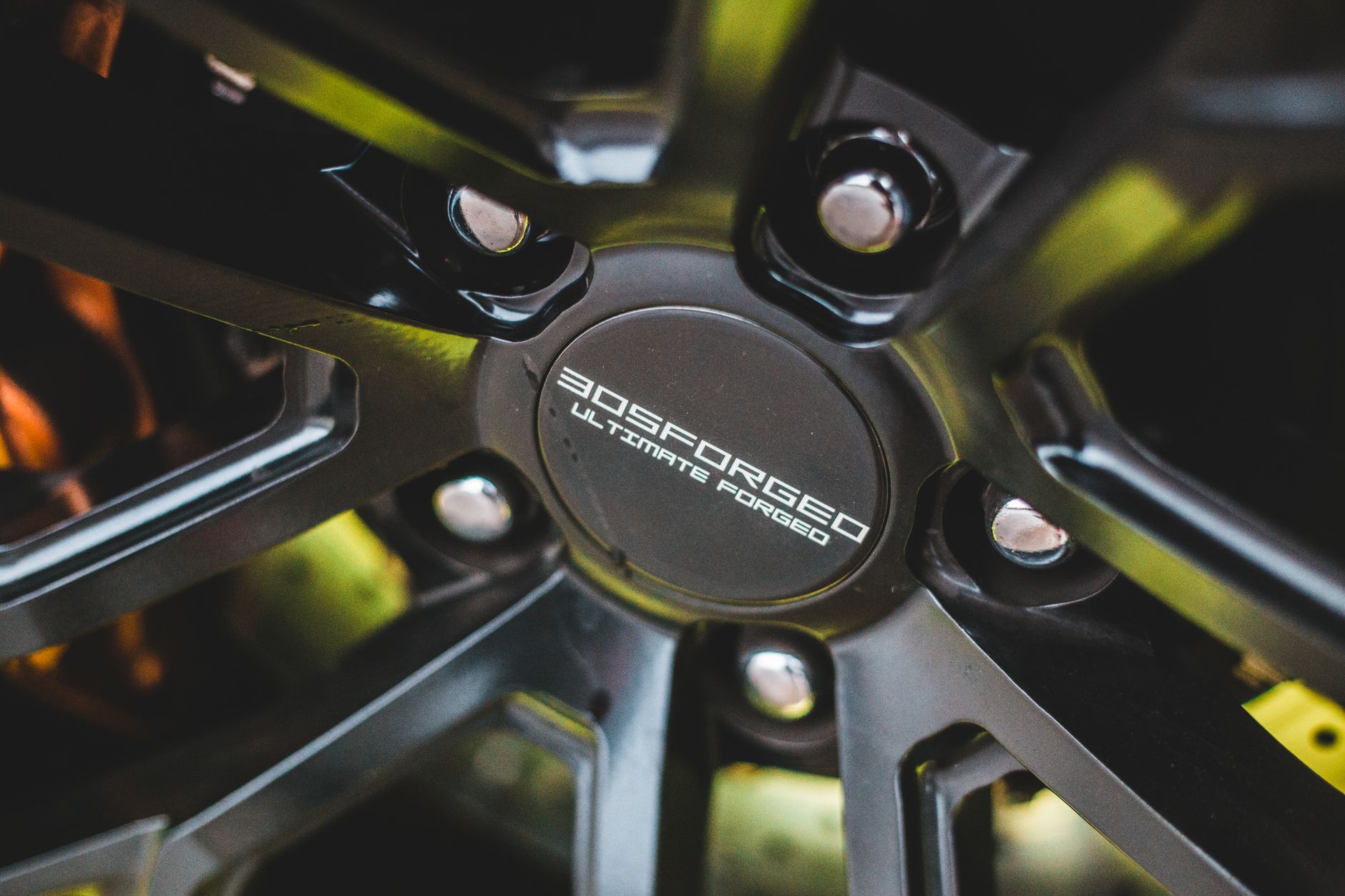
Spend five minutes on any wheel forum and you'll see both terms thrown around like they're interchangeable. They're not. Flow formed and forged wheels share some DNA — both start with aluminum alloy, both outperform standard low-pressure cast wheels — but the manufacturing process, the resulting material properties, and the price points diverge significantly. Getting this wrong means either overspending on capability you don't need or under-buying for a build that demands more.
How Each Wheel Is Actually Made
Cast Wheels (The Baseline)
Before comparing flow formed and forged, it helps to understand what both are improving on. A standard gravity-cast or low-pressure cast wheel pours molten aluminum into a mold and lets it cool. Simple, cheap, scalable — and the result is a relatively porous grain structure with inconsistent density throughout the barrel and face. That porosity is why cast wheels need more material (read: more weight) to hit structural targets.
Low-pressure casting is somewhat better than gravity casting — the controlled pressurization of the mold reduces some porosity — but neither process mechanically works the metal. The aluminum solidifies in place without compression, which means the grain structure is random, comparatively coarse, and loaded with micro-voids. Manufacturers compensate by adding wall thickness and material mass wherever stress concentrations occur, which is precisely why cast wheels end up heavy.
Counter-pressure casting and squeeze casting are more advanced variants that reduce porosity further, and some OEM manufacturers use these for their better stock wheels. But even these methods don't fundamentally reorganize the grain structure the way mechanical working does. They're still the ceiling for cast technology — and flow forming and forging start where casting ends.
Flow Forming: Cast Start, Forged Finish on the Barrel
Flow forming — also called flow forging, spinning, or rotary forging depending on the manufacturer — begins with a low-pressure cast wheel blank. The face is cast normally, but then the barrel (the cylindrical section that makes up the rim width) is pressed and stretched under heat by rollers while the blank spins at high speed. The mechanical working of the metal compresses and aligns the grain structure in the barrel, dramatically increasing tensile strength and ductility in exactly the area that takes the most fatigue stress from road impacts and cornering loads.
The rollers apply enormous localized pressure as the barrel is drawn to its final length and wall thickness. This isn't just stretching the metal — it's cold-working it in a controlled, directional way. The grain structure in the barrel elongates along the axis of forming, which is the same direction the wheel experiences bending loads when it strikes a pothole or absorbs a hard corner. That alignment is what gives flow formed barrels their impact resistance advantage over cast. Wall thickness can also be optimized more precisely than in casting, removing material where it isn't structurally necessary and concentrating it where it is.
The result: barrel strength that approaches forged levels, at a cost that's considerably lower than a fully forged wheel. A typical flow formed wheel runs 10–15% lighter than a comparable cast wheel. On a set of 19×9.5 wheels for something like a Mustang GT, that can translate to 4–8 lbs per corner — meaningful for unsprung mass, steering feel, and brake cooling clearance.
The face, however, is still cast. That matters. The spokes and center section don't go through the same grain-refinement process, so they retain cast material properties. For most street and track-day applications, this is completely fine. For extreme stress concentrations — think sustained abuse on a dedicated time-attack car or heavy drag launches — that distinction becomes relevant. A severe impact that strikes a spoke rather than the barrel is going to load a cast-grain structure, not a worked one. In practice, spoke strikes from potholes are rarer than barrel strikes, but on a car that sees aggressive use the distinction isn't purely academic.
Full Forging: One Piece, One Process
A forged wheel starts as a solid billet or pre-form of 6061-T6 or 7075 aluminum. It's heated and then compressed under massive pressure — typically 5,000 to 10,000 tons — which forces the grain structure to flow and align throughout the entire piece. Both the face and the barrel go through this process. The result is a homogenous, high-density structure with no porosity, exceptional tensile strength (typically 45,000–50,000 PSI for 6061-T6 versus around 30,000–33,000 PSI for cast aluminum), and far superior fatigue resistance.
The choice of alloy matters here. 6061-T6 is the industry workhorse — well-understood, machinable, weldable, and strong enough for virtually all automotive applications. 7075 is used by manufacturers chasing the absolute lowest weight at maximum strength; it has a higher tensile ceiling but is harder to machine and more notch-sensitive, meaning it's less forgiving of stress concentrations from surface damage. For most enthusiast builds, 6061-T6 forged is the right balance. 7075 is more relevant for motorsport-specific applications where every gram matters and the wheels are inspected and replaced on a defined schedule.
After pressing, the wheel is CNC machined from the forged blank to its final shape. This machining phase is where most of the design detail happens — pockets, spoke profiles, weight-reduction cuts — and it's also where cost accumulates. Setup time, tooling, and machining hours per wheel are significant. A complex multi-spoke design with heavily undercut pockets can require multiple CNC setups and hours of machine time per wheel. That's before finishing, inspection, or certification testing.
A forged wheel in the same 19×9.5 size as the flow formed example above will typically come in another 3–6 lbs lighter, depending on spoke design and how aggressively the manufacturer machines for weight. A well-designed forged wheel in that size can realistically hit 20–22 lbs. A comparable flow formed wheel might land around 24–26 lbs. A cast equivalent? Often 28–32 lbs.
Strength, Weight, and What the Numbers Mean in Practice
Tensile strength figures sound impressive but they need context. On a daily-driven F30 335i running a 19-inch staggered setup, a quality flow formed wheel is genuinely more than adequate. The structural loads from street driving, occasional track days, and even spirited canyon runs fall well within the safety margins of a well-designed flow formed wheel. Many OEM wheels from BMW, Mercedes, and Honda on sport models are themselves flow formed — that should tell you something about the technology's credibility.
It also helps to think about where wheel failures actually occur. The overwhelming majority of alloy wheel damage in street use comes from low-speed pothole impacts and curb strikes, not from fatigue accumulated during high-speed cornering. Flow forming directly addresses the failure mode that matters most for street and occasional-track use — barrel cracking and bending from impacts — because that's exactly the section it strengthens. A flow formed wheel is a rational, targeted engineering solution for the real-world stress profile of most enthusiast cars.
Where forged construction earns its premium is at the extremes: dedicated track cars that accumulate thousands of hard laps per year, drag racing applications with launch forces and curb strikes, off-road builds, or customers who simply want the lightest possible wheel with maximum structural reserve. On a turbocharged Supra or a heavily modified GT3 Porsche, trimming 15–20 lbs of unsprung mass by going forged over cast has measurable effects on acceleration, braking distance, and steering response. The physics here are well-established: unsprung mass affects wheel control, suspension response to road inputs, and rotational inertia simultaneously. Reducing it benefits handling in multiple compounding ways.
For a Tesla Model 3 Performance owner who wants a lighter, sharper-looking wheel for mixed street and occasional track use, the real-world difference between a quality flow formed and a forged wheel is often felt more in the wallet than in lap times.
The Design and Customization Factor
This is where forged wheels pull ahead for buyers who want serious customization. Because a forged wheel is machined from a blank, spoke geometry, depth, and concavity can be precisely engineered to order. Deep concave profiles, aggressive offsets, complex multi-spoke designs — these are all achievable in forged construction in ways that flow forming simply cannot match, because flow forming is constrained by the initial cast shape of the face.
If you're after a deep-dish look — say, a 9-inch wide front and 11-inch wide rear staggered setup with 15–20mm of concavity on the rear — that's a forged-only conversation. Flow formed wheels can do mild concavity and standard fitments well, but the design palette is narrower. The cast face limits how dramatically the spoke geometry can be recessed, and the barrel-forming process imposes constraints on available widths and offsets within a given tooling run. What you see in a flow formed manufacturer's catalog is largely what you get.
Forged construction, by contrast, means the design exists primarily in the CNC program. Want a different offset? Update the toolpath. Want a stepped lip with a specific inner barrel depth? Adjust the machining. Want to run a 10.5-inch wide rear with a low offset on a platform that's never seen that fitment in catalog form? That's a conversation a forged manufacturer can actually have. This is why serious fitment-forward builders — the kind of shops that spend months dialing in exact tire-to-fender clearance on custom widebody projects — almost exclusively work with forged manufacturers.
Custom offsets, non-standard bolt patterns, and center bore specifications are also far more flexible on forged wheels. Flow formed production benefits from semi-standardized tooling, which limits how far outside normal specs you can go.
Price Differences: What You're Actually Paying For
A set of quality flow formed 18-inch wheels from a reputable brand typically runs $800–$1,400 for a set of four. Forged wheels from the legacy brands — Vossen, BBS, HRE, ADV.1 — can run $3,000–$8,000 or more for a set, sometimes significantly more for custom offsets and finishes.
The price gap comes from several real cost drivers: billet or forged blank material costs more than casting; CNC machining time is substantial; forging press tooling and setup per design is expensive; and legacy brands price in their distribution overhead, marketing, and dealer margins. That last category is larger than most buyers realize. A brand with a global dealer network, trade show presence, sponsored build content, and celebrity ambassador relationships has overhead baked into every wheel — overhead that has nothing to do with metallurgy.
At ForgedToFit, our approach cuts most of that out. By working directly with an OEM forging partner — the same facility type supplying major automakers — and eliminating the wholesale-to-dealer chain, fully forged custom wheels come in at 50–70% below what you'd pay for equivalent construction from the recognized names. A customer speccing a forged fitment for a custom BMW build — say, a 20×9 ET35 and 20×10.5 ET20 staggered set for an F90 M5 — can get genuinely forged construction with custom finish and a 5-year warranty without the four-figure-per-wheel pricing.
Durability and Real-World Longevity
Flow formed wheels hold up well for most drivers. The barrel's improved grain structure handles road impacts better than cast, which reduces the likelihood of cracking from pothole strikes — the most common failure mode for alloy wheels. The face, being cast, can crack under severe impact, but this is uncommon under normal conditions.
One area where flow formed wheels sometimes show their limits over time is in cumulative fatigue on high-mileage applications. Cast spokes, even well-designed ones, develop micro-crack propagation faster than forged spokes under repeated high-stress loading. For a car doing 30,000 miles a year on rough urban roads — a scenario where small impacts compound over hundreds of thousands of cycles — the forged face's superior fatigue resistance becomes more relevant than it would be on a weekend driver. This isn't a reason to avoid flow formed wheels for most applications, but it's worth understanding if longevity under hard daily use is a specific concern.
Forged wheels are simply harder to break. The dense, aligned grain structure absorbs and distributes impact energy more effectively. In independent structural testing, forged wheels consistently survive impact and fatigue tests that crack cast and sometimes flow formed specimens. For a car that sees autocross, HPDE events, or genuinely rough road conditions, that durability margin is tangible.
Finish longevity is roughly equivalent between the two — both can be powdercoated, painted, polished, or anodized with similar results and similar maintenance requirements. The difference in surface finish quality tends to come from the specific finishing process and quality control of the manufacturer rather than the underlying wheel construction.
Which Construction Matches Which Use Case
Being direct about this matters more than hedging.
Flow formed makes sense when:
- You want a meaningful upgrade from OEM cast wheels without a major budget commitment
- The car is primarily street-driven with occasional track days
- Fitment requirements are within standard ranges
- Design priority is moderate — you want it to look good but aren't after a custom deep-dish profile
Forged is the right call when:
- The car is a dedicated track, time-attack, or drag vehicle
- You need non-standard offsets, widths, or custom bolt patterns
- Weight savings beyond what flow forming achieves is a priority
- You want deep concavity or a fully custom spoke design
- Long-term structural integrity is non-negotiable
- The build is high-value enough that wheel failure has serious consequences — not just financial, but safety-related
A stock-engine Civic Si on the street? Flow formed is excellent and probably all you need. A supercharged C8 Corvette doing track days with slicks? Forged, without much debate. The middle ground — a well-modified WRX STI that sees spirited road driving, the occasional autocross, and some light track time — is where the decision genuinely requires weighing budget against priorities, and either answer can be defensible depending on how those miles break down.
A Note on Marketing Claims
The term "flow forged" is used by some brands to make flow formed wheels sound like forged. They're not. Flow forging and forging are different processes; the former is a marketing-softened name for flow forming. Worth scrutinizing any spec sheet that uses the terms ambiguously — ask specifically whether the center and face of the wheel is forged billet or cast.
"Rotary forged" is another variant of this terminology used by reputable manufacturers, including OEM suppliers, to describe flow forming accurately — but it can be confused with full forging by buyers who don't know the distinction. The defining question is simple: does the entire wheel — face, spokes, and barrel — originate from a forged billet, or was the face cast and only the barrel worked? If the face was cast, the wheel is flow formed regardless of what name the marketing uses.
Similarly, "monoblock forged" vs "two-piece" or "three-piece forged" matters. A two-piece wheel with a forged center and a spun barrel isn't the same as a one-piece monoblock forged wheel, and the structural characteristics differ. Multi-piece wheels have their own legitimate use cases — particularly for extreme custom sizing where a single-piece forging would waste enormous amounts of expensive billet — but they introduce bonded or bolted joints that are structurally weaker than a continuous forged piece and require more maintenance attention over time. At ForgedToFit, our custom forged wheels are monoblock one-piece forged construction — the entire wheel, face and barrel, pressed from a single forged blank.
Making the Decision
The honest answer is that both technologies produce good wheels. The question is which one matches the actual demands of your build and your budget. For a large portion of enthusiasts — people running a tuned daily, an occasional track car, or a clean street build on a platform like a Model 3, WRX, or G37 — a well-made flow formed wheel delivers real benefits over cast at a price that makes sense. The improvement in barrel strength alone justifies the step up from OEM cast, and the weight savings are noticeable in steering feel and ride quality even if they don't show up in lap times.
For the customer who's already spent heavily on suspension, brakes, and power mods, and who logs serious track time, forged construction's strength, weight, and customization advantages justify the step up in cost — especially when that step up doesn't have to mean legacy brand pricing. The manufacturing quality that goes into a monoblock forged wheel is real and measurable. The question is only whether you're paying for the wheel or for the badge on the center cap.
Frequently asked questions
Is flow formed the same as forged?
No. Flow formed wheels start as cast blanks and have only the barrel mechanically worked under heat and pressure. The face remains cast. Forged wheels have the entire wheel — face and barrel — pressed from a solid billet under high pressure, resulting in superior grain structure throughout and higher tensile strength.
How much lighter are forged wheels compared to flow formed?
It depends on design, but in equivalent sizes, a forged wheel typically runs 3–6 lbs lighter per wheel than a flow formed wheel. A well-designed forged 19×9.5 might hit 20–22 lbs versus 24–26 lbs for a comparable flow formed wheel and 28–32 lbs for a standard cast wheel.
Are flow formed wheels strong enough for track use?
For the majority of track day and HPDE drivers, yes. Flow formed wheels have significantly improved barrel strength over cast and handle normal track stresses well. For dedicated time-attack or competitive road racing with heavy mileage, fully forged construction offers better fatigue resistance and is worth the investment.
Why do forged wheels cost so much more?
The billet or forged blank material is more expensive than casting alloy; CNC machining from a forged blank requires substantial time and tooling; and pressing setup has higher fixed costs per design. Legacy brands also add wholesale, dealer, and marketing overhead. Direct-to-consumer forging operations can bring forged wheel prices much closer to what you'd pay for premium flow formed wheels from established retailers.
Can I get custom offsets with flow formed wheels?
To a limited extent. Flow forming uses semi-standardized tooling for the barrel, which limits how far outside standard offset ranges manufacturers can go. Forged wheels machined from billet blanks offer much greater flexibility for custom offsets, widths, and bolt patterns.
What does 'flow forged' mean on a wheel spec sheet?
'Flow forged' is a marketing term used by some brands for what is technically a flow formed wheel. The process is the same — a cast blank with a mechanically worked barrel. It is not the same as a fully forged wheel. If a spec sheet uses this term, ask specifically whether the wheel face is forged billet or cast.

